
Cars, Calculators and AI. How our Imaginations Keep Failing Us
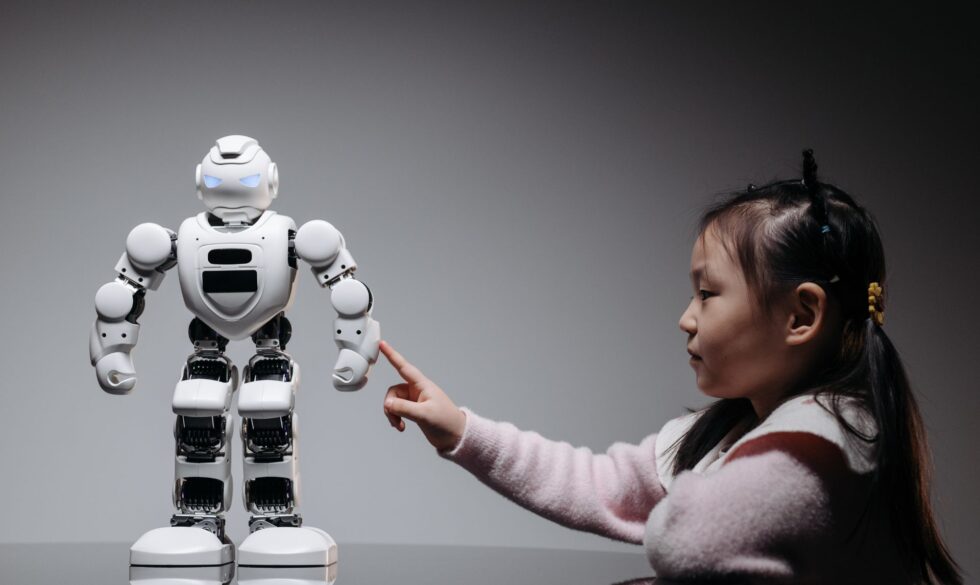
A few months before I stood up in front of the Mercedes-Benz executive team to talk about AI, I was driving to their head office and I asked Claude a question on the way. Not for the history of the motor car, and not a biography of Karl Benz. I wanted to know what people were saying in 1885. What was in the newspapers. What was said at the dinner table when Benz’s Patent-Motorwagen first appeared.
I knew that in 1885, personal mobility meant your feet, a horse, a carriage or cart, a train, or a ship. Then a man arrives with a three-wheeled, one-cylinder contraption that struggles to reach 16 kilometres an hour, and people look at it and ask: how can this possibly change my life?
I have a horse, says the man across the dinner table. I understand how a horse works. My horse is faster. My horse doesn’t break down. My horse can recreate another horse. Why on earth would I replace my horse with that?
Nobody at that table could picture the leap the Motorwagen was about to allow. They couldn’t imagine it with a bigger engine, with more wheels, with a roof, with a boot. They couldn’t imagine towing a caravan behind it, or launching a boat at a dam and bringing it home again. The gap between the object in front of them and what it would become was too wide to see across.
It’s the same failure of imagination I hear today, almost word for word, when people talk about Artificial Intelligence. “It’s just Google on steroids. I’ve already got Google.” Swap a few nouns and that’s the horse owner talking.
AI’s Slower Cousin
It’s worth noticing this pattern has a slower cousin, one possibly a little closer to home depending on your age. Digital calculators arrived, on mass, in the early to mid 1970s. They were cheap, small, and suddenly on every shelf. Parents and teachers said no. They feared it would make children lazy and mathematically illiterate.
That argument didn’t run for a year or two. It ran for two decades. American schools didn’t formally embrace calculators in the classroom until 1994. That’s twenty-odd years of “no, not yet, they’ll ruin how children think” before anyone worked out how to let the tool in without losing the thinking.
What eventually resolved it wasn’t the technology changing. It was how mathematics was taught. Children still learned long division and multiplication by hand, still understood what the calculator was actually doing before they were handed one. By the time it was allowed into an exam, it wasn’t a thinking device replacing brains, it was a tool children understood, one that let them solve six problems in the time it used to take to solve one. The calculator didn’t replace mathematical thinking. It amplified it.
Twenty years. For a device that adds and subtracts.
We Haven’t Even Met It Yet
We’re running the exact same script again. Job loss. Moral panic. The kids won’t be able to think for themselves. The machines will make us weaker, smaller, less ourselves.
Fair enough. Every one of those fears was said about the Motorwagen. Most of them were said about the calculator too.
You and I are standing at the dinner table again, except this time we’re the ones with the horse. We’re looking at the new thing through the eyes of the old thing, and the gap between what’s in front of us and what it becomes is, once again, too wide for most of us to see across.
As For Me: I’m Adopting the ‘Law of the Calculator’
I’m not going to pretend I’m above any of this. I’ve bought a small Windows box, built to run pretty basic local LLMs, and I talk about it the way other men talk about a new bicycle. It’s a bit much.
But I’ve resolved, this time around, and it won’t be the last time a “this time around” is required, to jump in boots and all. I’m doing my best to understand what this new thing is, how it works, and what it can and can’t do. If the calculator taught us anything, it’s that a tool built to do the heavy lifting doesn’t dumb you down or make you lazy. It has the potential to hand you a far deeper, more sophisticated set of skills. And in all of history I know of, that hasn’t been a terribly bad quest to undertake.
And by the way, we’re not waiting for AI anymore. That horse has bolted. It’s waiting for us. It’s moved way, way, way beyond asking it Google-type questions, re-framing your next email, and writing poetry and love notes for your current romantic interest. Whatever the smartest person you know can do with a keyboard, you can be confident that the larger models can do at least that, and far more, in a fraction of the time.
So here’s the question I keep landing on, the one I think the man at the dinner table in 1885 never got to ask himself: not can this thing replace my horse, but what does my life look like once it can do things my horse never could?
We get to choose, in this chapter of the human story, whether we end up amplified or sidelined. It’s not a technology conversation. It’s whether we’re willing to do the sometimes uncomfortable work of forcing our imaginations past the object sitting in front of us, to whatever it actually becomes in our hands.
Your horse is fine, by the way. Nobody’s asking you to shoot it. Just don’t be surprised when you find yourself, a few years from now, wondering what all the fuss was about.
<#NufSed>